A shelf is a program, not a genre tag.
We file for how a side sits in this room at 18:30 — salt air, modal weight, or a Hebrew chorus — not for a collector’s catalog number.

Carmel Center · Haifa
A photo-led walk through pressings that return to the evening cards. These records are for the room, not a shop window. We play them; we do not stack them by the register.
Collection gallery
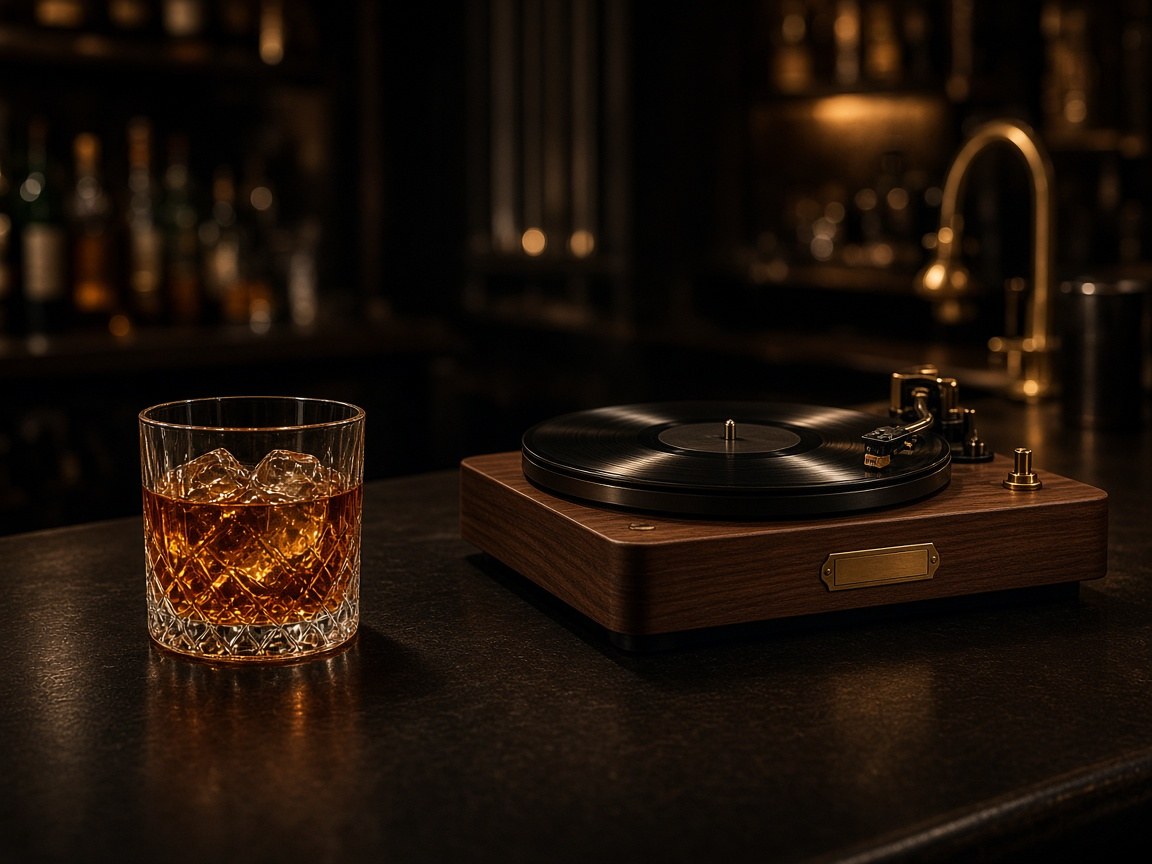
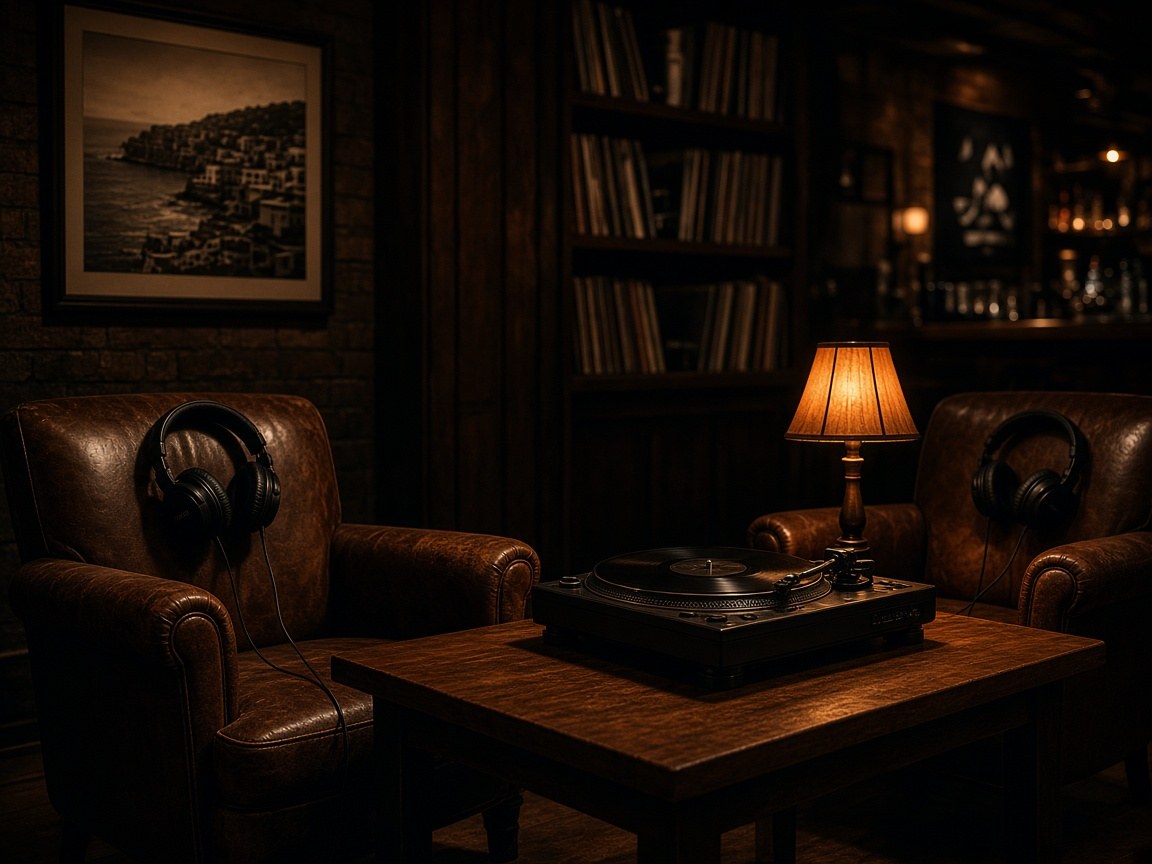
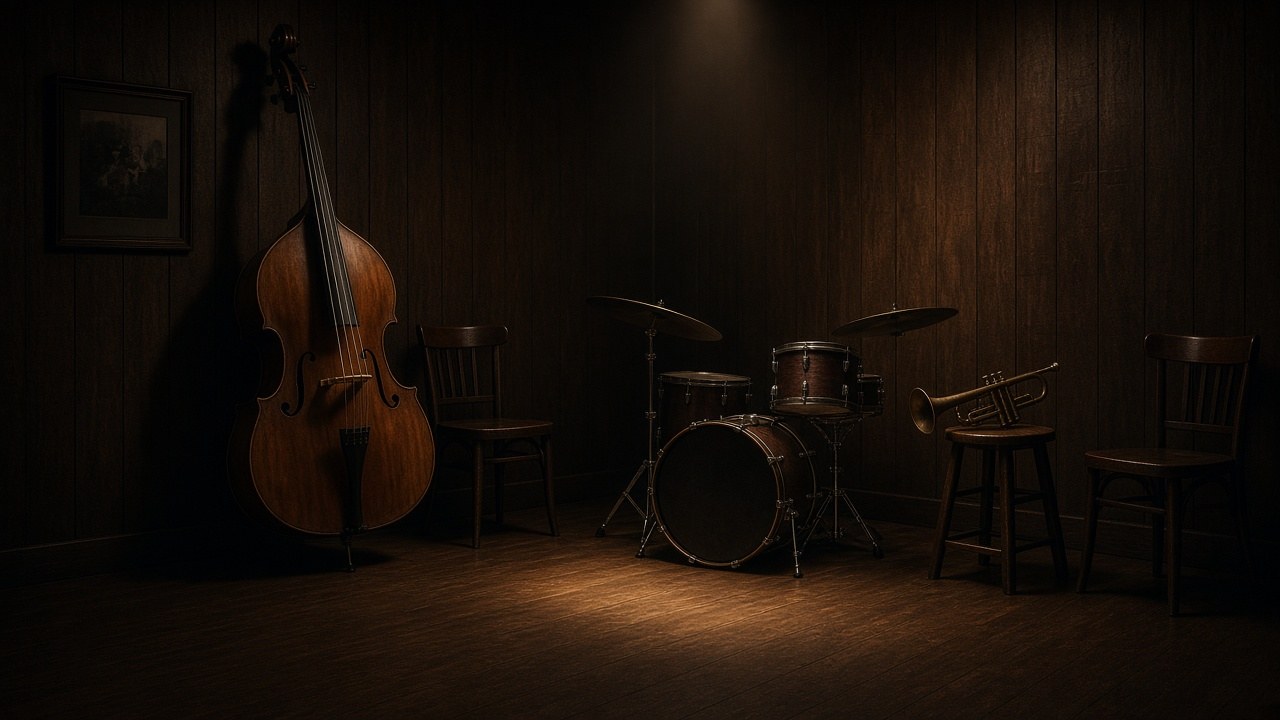
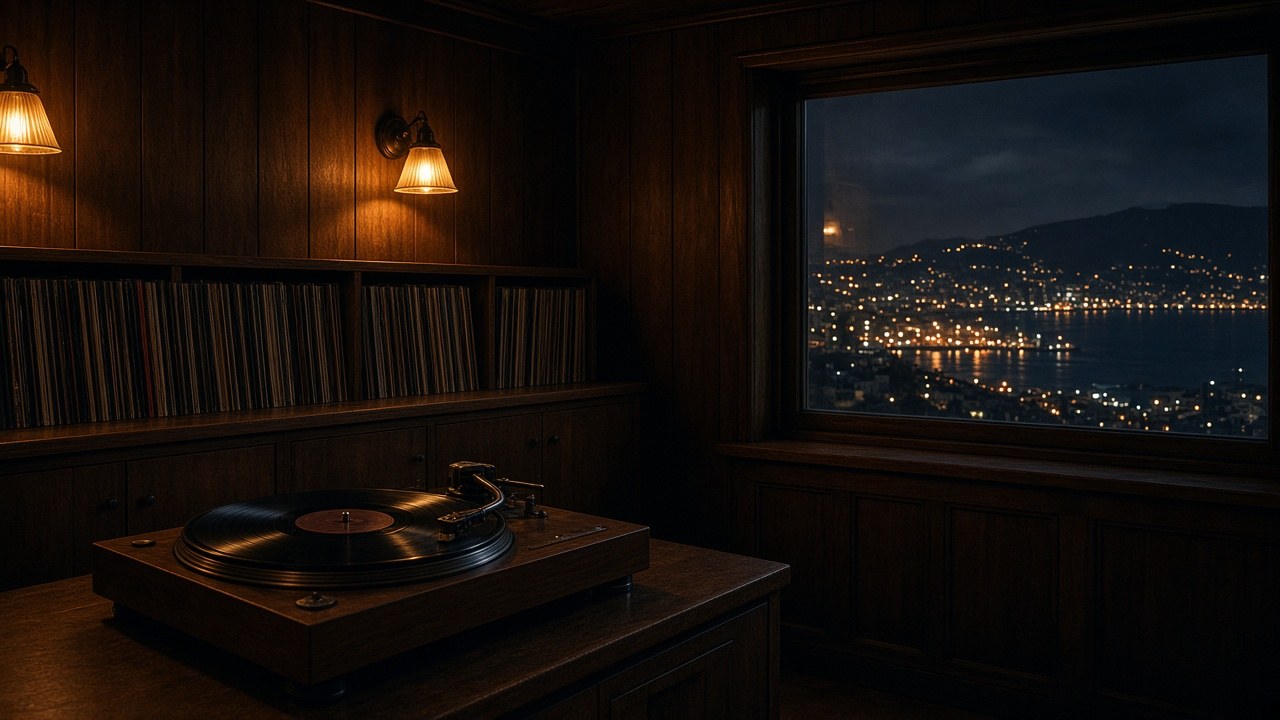
Each card below is a sleeve we return to. Years and titles describe the pressing as it lives in the Loft. The photographs show the cabinets, the deck, and the room that has to carry them — not a marketplace thumbnail. Three jackets are typeset only; we will not reprint the same photograph to fill a grid.

How we play them
Sleeves enter the evening card only after a quiet audition on both decks. If a pressing is beautiful on paper and thin in the last row, it stays in the archive. If a scuffed Israeli copy still throws a singer into the booth, it earns Tuesday.
We do not run a request karaoke from the bar. Written notes at the door are read after closing. If your pressing belongs in this room, we would rather borrow the knowledge than the shouting.
Fragile first pressings leave the locked drawer only for announced sleeve talks, with a second listening copy on the platter when we can. The Loft’s vanity is the room, not the collector flex.

Deck two — the idler for older Mediterranean weight
Filing
Guests do not browse the wall like a shop floor. The staff pull for the card. Tuesday lives in the coastal bay. Wednesday in the hard-bop drawers. Thursday in the voice-and-orchestra run. Weekend live nights put the cabinets to rest after the last LP. Sunday opens the locked drawer only when the speaker’s album is announced.
We file for how a side sits in this room at 18:30 — salt air, modal weight, or a Hebrew chorus — not for a collector’s catalog number.
When a first pressing is too frail for weekly handling, a later copy takes the needle. The jacket on the talk table is the story; the groove that plays is the one that will survive the night.
If you want a second copy of something you heard, leave a name with the door. We will not interrupt a vocal to talk price, and we will not run a crate sale in the aisle.
Locked drawer
A short run of fragile Israeli and Eastern Mediterranean originals stays off the weekly card. They appear when a sleeve talk is posted — cleaned that afternoon, handled by the duty manager, returned before Monday’s rest. Guests do not take them to the table. The house does not pass them around for photographs during the talk.
If you hold a copy you believe belongs in that drawer, write after closing. Bring the knowledge. Do not arrive with a bag of records and expect the deck.
The card
These jackets return because they carry to chair 48. Reserve a midweek listening night, or a Sunday when a single album is the whole event.